Not a course. Not a club. A single private hole, and a century of lore behind it.
The Lore
A Crossroads of a Golden Age
On the centennial of artist Francis McComas's 1926 residence at the corner of Cypress and Stevenson, the home is marking its history in a way that nods to tradition, whispers of lore, and honors a Pebble Beach legacy.
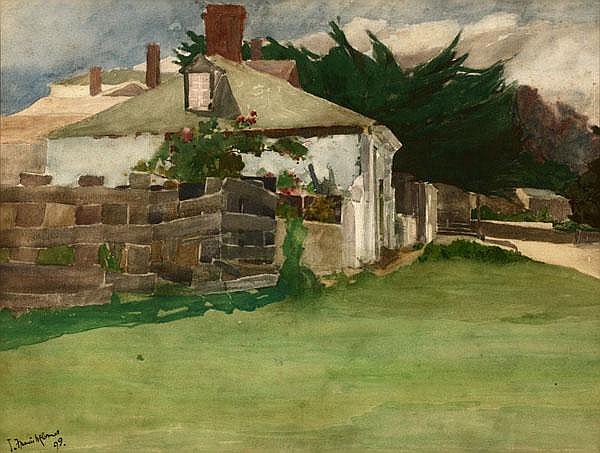
McComas arrived in California the hard way, a Tasmanian painter who worked his passage across the Pacific as a merchant seaman and stepped off in San Francisco with little more than his brushes. Within a generation he was one of only three California artists invited to the famed 1913 Armory Show in New York, the man Cecil B. DeMille hired to design the sets of The Ten Commandments, and the painter whose spare, haunting watercolors of the Monterey cypress helped teach the world to see this coast. It was McComas who called this stretch of shoreline the greatest meeting of land and water in the world. The line stuck. It hangs over the Peninsula still.
In his day, critics counted him among the finest watercolorists alive. When San Francisco hosted the world's fair in 1915, an entire gallery was devoted to his work alone. Yet McComas painted sparingly, and by the height of the twenties he preferred good company to the easel. The result is a rarity the art world quietly acknowledges: a McComas almost never surfaces at auction. There is simply not enough of it, and those who hold one tend to keep it. His paintings hang where they were hung, in the clubhouses and homes of the Peninsula he helped make famous.
When fire took the Hotel Del Monte in 1924, Samuel F.B. Morse, the founder of Pebble Beach, commissioned McComas to paint the murals of the rebuilt grand lobby. Payment came partly in land: a parcel at the corner of Cypress and Stevenson, where the painter and his wife, the artist Gene Baker McComas, built their home and studio. When Cypress Point Club rose a few years later, it was McComas the member who decorated its clubhouse walls. And McComas, an avid golfer, left his mark on the game itself: the famous two-tiered 14th green at Pebble Beach Golf Links, set among the overhanging oaks and still one of the most feared putting surfaces on the course, was designed by the painter's own hand. His fingerprints are on the golden age of this Peninsula in ways most visitors never learn.
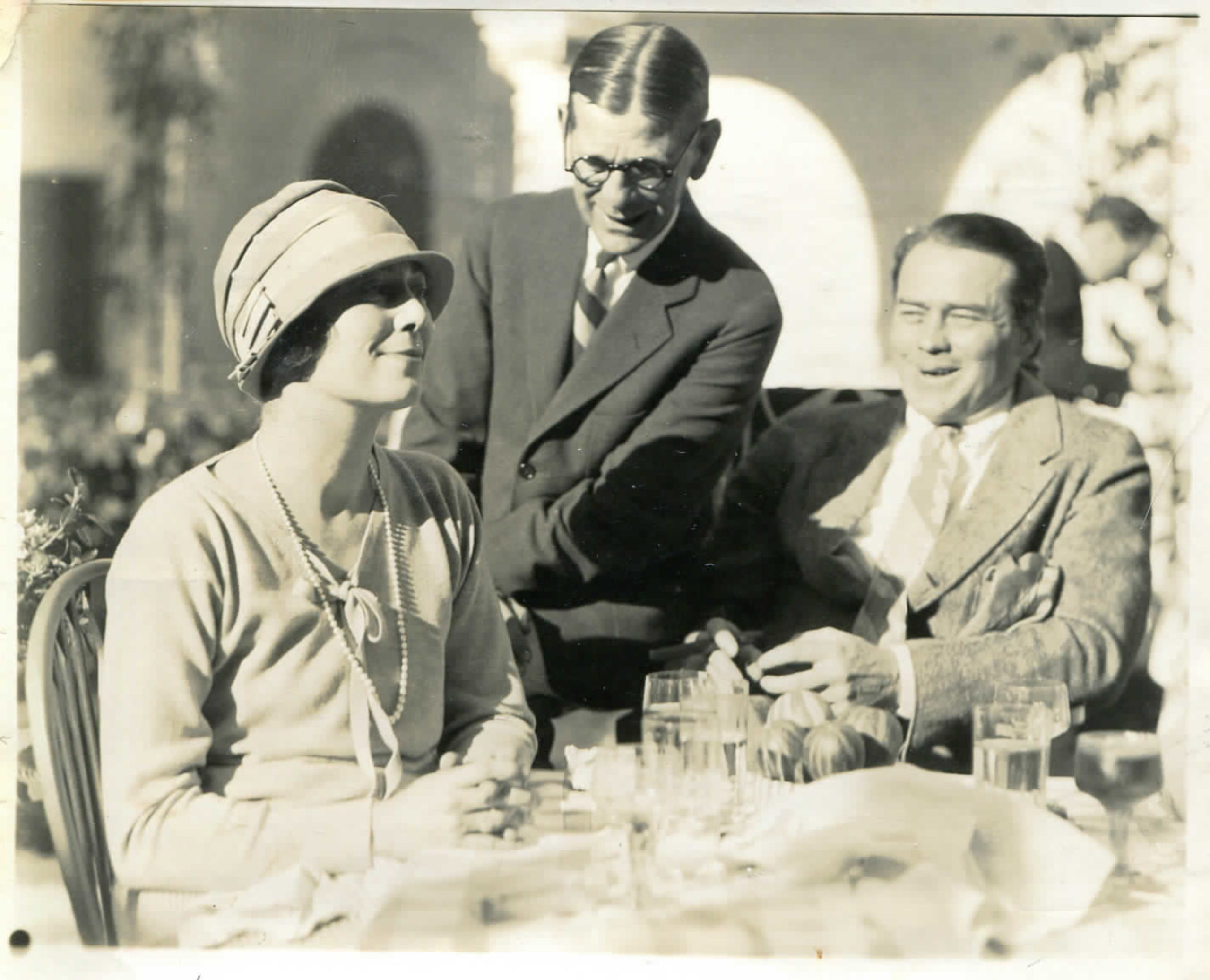
But the paintings were only half the man. McComas was a raconteur, and by the mid-twenties his house had become a crossroads for the dignitaries, artists, and golfers shaping Cypress Point and Pebble Beach. Morse and Marion Hollins. Visiting champions and touring stars. The guest books were never kept, which is rather the point. But the names were known: Charlie Chaplin. The Rockefellers. Hemingway. Men fresh off the Amateur at Pebble Beach with debts of honor still open. Among the ideas that lived within these walls was the "gentleman's end": a quiet finish beyond the galleries, a private swing reserved for fellowship, where the day's wagers were settled among friends.
1926
The Residence
The Residence
Francis McComas takes up residence at the corner of Cypress and Stevenson, on land traded for art. The house becomes a gathering place for the figures shaping the Peninsula's golden age.
1929
The High-Water Mark
The High-Water Mark
Cypress Point opens with McComas's hand on its clubhouse. Bobby Jones falls in the first round of the Amateur at Pebble Beach and plays Cypress Point instead. Weeks later, the crash. The gatherings end, and the gentleman's end remains only a story.
1938
The Stories Go Quiet
The Stories Go Quiet
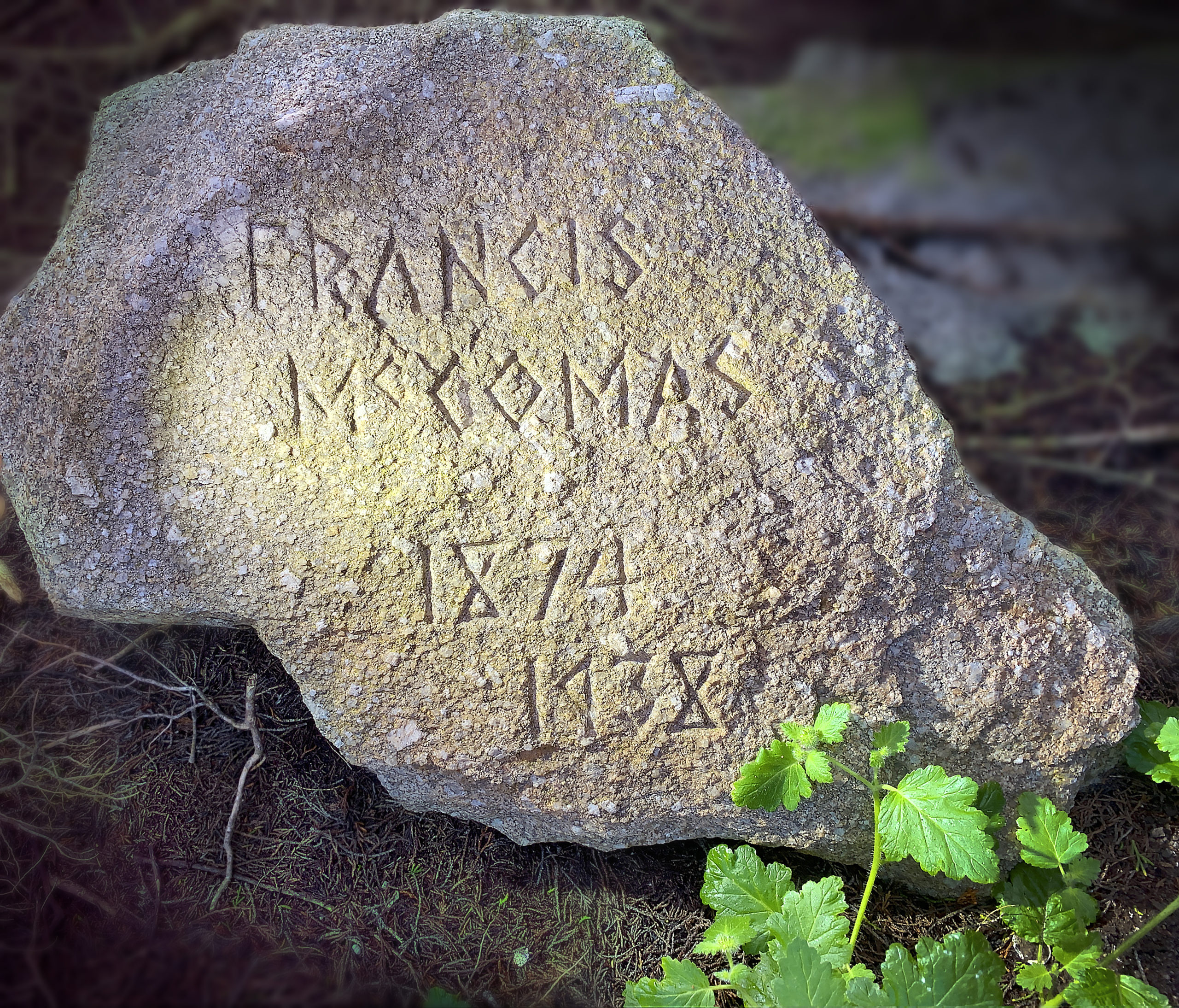
McComas passes away at his Pebble Beach residence, leaving the home to hold its history for nearly a hundred years. Unbeknownst to most, his ashes were buried beneath a landmark rock at Cypress Point Lookout, permanently linking him to the coastline.
2026
The Memory Given Form
One hundred years on, the gentleman's end is built at last. It belongs to the residence alone, part of the home's living history.
The Hole
One Swing, Reserved
The Gentleman's End is not a course, nor a club, but a single private hole. A gesture to the past and a continuation of the spirit McComas fostered here. It sits in the lee of the Monterey cypress, the same wind-bent sentinels the painter spent his life putting to paper, on ground shaped to remember what this corner of the Peninsula looked like before anyone kept score.
The approach moves through native dunes the way the old holes here always have. In spring the sand runs yellow with verbena and California poppy, dune lupine holds the ridgelines, and the green sits low among natural bunkers, guarded the way the Peninsula's great holes are guarded: by wind, by sand, and by nerve. Beyond it, a meadow of native grasses rises toward the coast live oaks and the pines, so that a ball struck at dusk seems to travel through a McComas watercolor rather than across a lawn. Nothing about it announces itself. That, too, is the tradition. A century after McComas shaped the fourteenth green at Pebble Beach, a green rises once more on the painter's own ground.
Played in the fog, wagered in the parlor, remembered at the corner of Cypress and Stevenson.
The Tees
Four Ways to the Green
One green, one flag, and four ways to reckon with it. Three are named for hands that shaped the game and are played in a manner true to the era each honors. The fourth is named for what it asks of you.
Back TeeThe Old Tom122Yards
Played as the game began: a ball teed on a hand-packed pyramid of sand and struck with a classic hickory-shafted wedge. The longest and most exacting line to the flag, in tribute to Old Tom Morris and the links century that first taught the ball to fly from sand.
Sand tee · Hickory wedgeMiddle TeeThe MacKenzie110Yards
Set on native turf among the dune grasses, named for Alister MacKenzie, whose Cypress Point rose a short walk from this corner. A shot that asks to be shaped low beneath the wind, the way the Peninsula's great holes have always been played.
Here the instrument is the player's own choice: the wedge in their bag, or one drawn from the case kept at the house. Clubs once swung by hands that need no introduction. Tiger Woods. Babe Ruth. Bobby Jones. Nicklaus. The case runs longer than the list, and the list is not published.
Native turf · Choice of wedgeForward TeeThe Nicklaus99Yards
Ninety-nine yards falling forty feet to a green set low in the dunes, a deliberate echo of Pebble's famed seventh, the smallest great hole in golf. Named for the champion whose mastery of that coast became its own legend.
40-foot drop · Echoes the 7thWager TeeThe Gamble?Drawn Daily
Today's draw: Old TomBRSand
The fourth tee is never the same shot twice. Each morning the box is drawn, and with it the club and the manner of teeing the ball. A remix of the three that come before it, in a combination the house settles before the fog lifts.
No guest is told the yardage until the yardage is asked for. What does not change are the terms, and the terms are the whole of it.
Drawn daily · The wedge is the wager
“The greatest meeting of land and water in the world.”
Francis McComas, on the coast he called home
"It is not open, nor advertised, yet its presence will be felt. In whispers, in fellowship, and in the rare moments when a door opens to those who find themselves, somehow, invited."